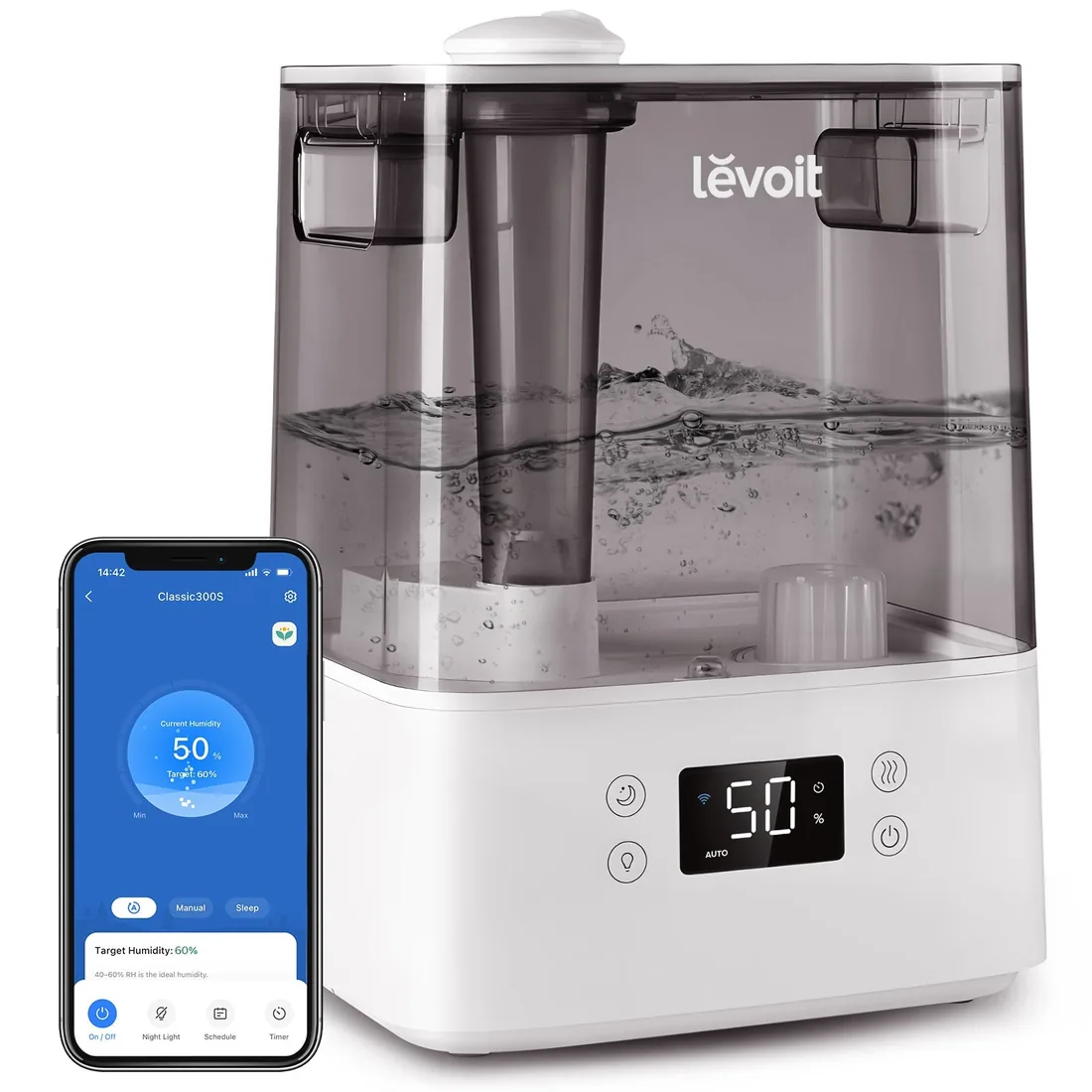
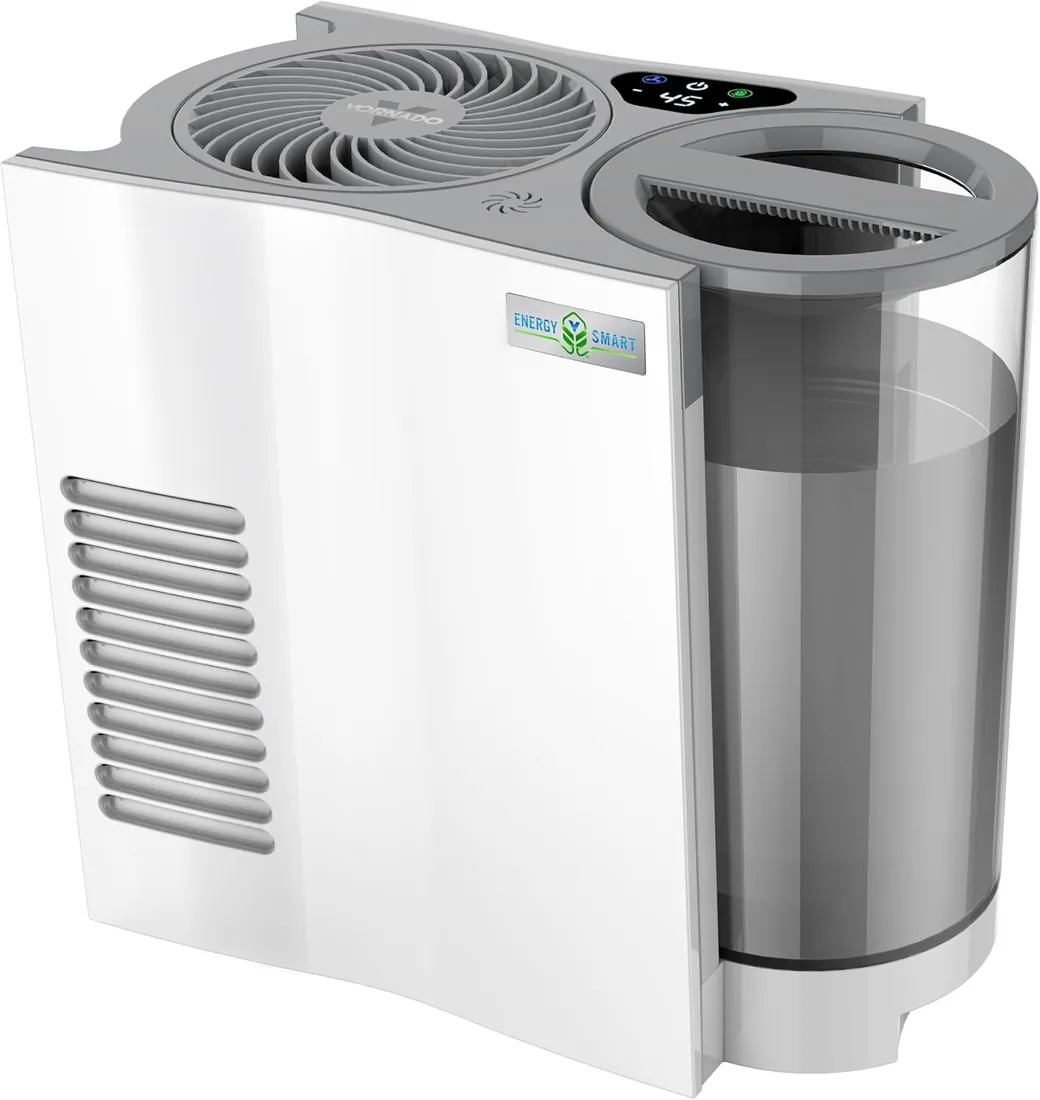
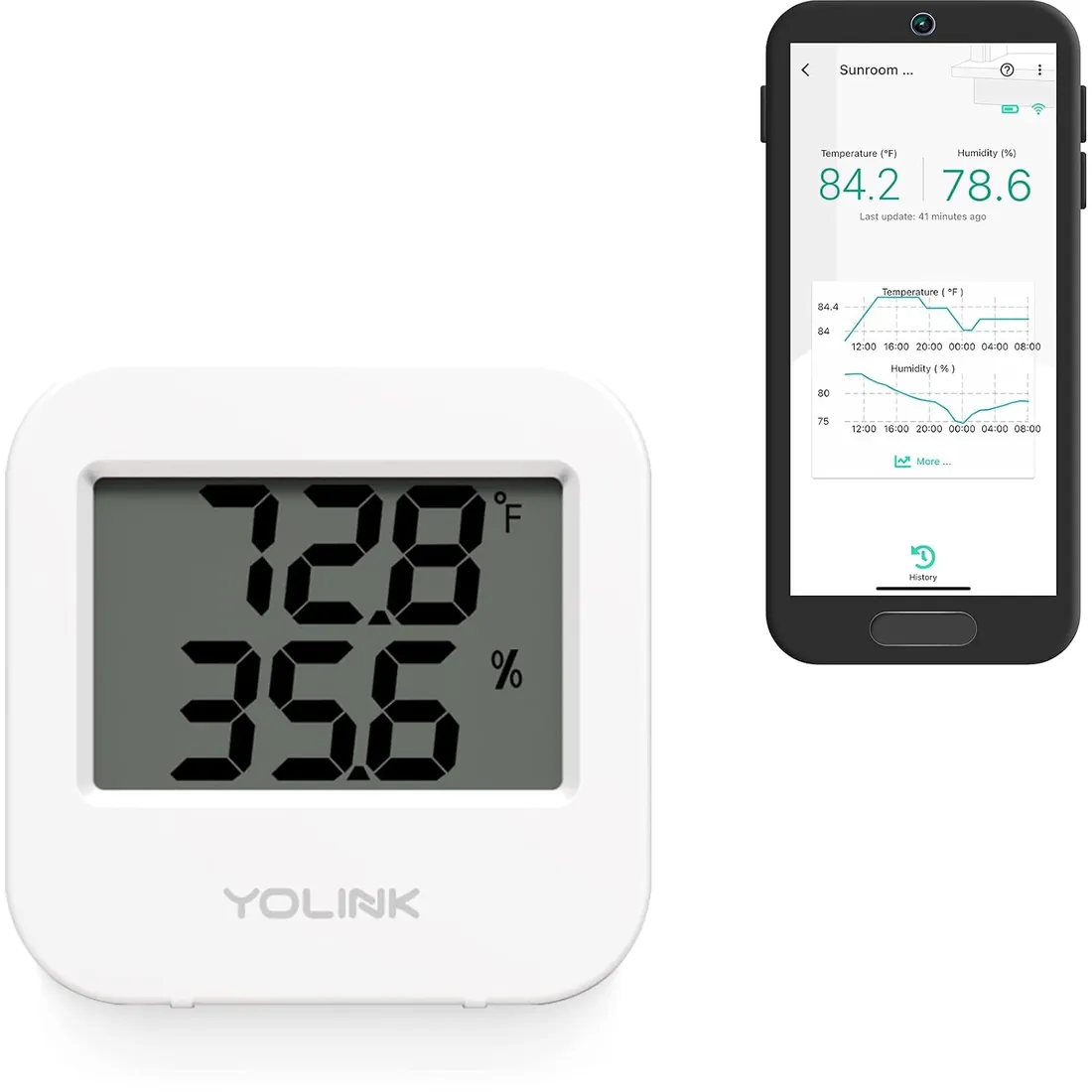
Most tropical houseplants do best at 50 to 60% relative humidity; succulents and cacti are fine at 30 to 40%. In winter, heated indoor air often drops to 20 to 30%, which is when a humidifier helps. Group humidity-loving plants together, run a cool-mist humidifier a few feet from them, and keep a hygrometer in the room so the overall humidity stays below about 55% to avoid condensation and mold.
How much humidity plants need
| Plant group | Examples | Target humidity |
|---|---|---|
| High-humidity tropicals | Calatheas, ferns, orchids, alocasias | 60 to 70% |
| Typical tropicals | Monsteras, philodendrons, pothos, peace lilies | 50 to 60% |
| Tolerant foliage | Snake plants, ZZ plants, rubber plants | 40 to 50% |
| Arid plants | Succulents, cacti | 30 to 40%; avoid humidifying |
Signs that air is too dry for tropical plants: brown, crispy leaf tips and edges, new leaves that fail to unfurl, and buds that drop before opening. Low humidity is not the only cause of brown tips (overfertilizing and inconsistent watering also cause them), so check the humidity with a hygrometer before buying a humidifier.
Which humidifier to use
- Ultrasonic cool mist: quiet and efficient, and the visible mist is easy to aim near plants. Use distilled or demineralized water; hard tap water leaves white mineral dust on leaves, which blocks light.
- Evaporative: no white dust and hard to over-humidify, so it suits rooms where plants share space with furniture and electronics. The wick needs replacing every one to three months in use.
- Warm mist: works, but avoid pointing hot vapor at foliage and keep it away from children and pets.
Size it to the room, not the plants: a small humidifier of 2 to 4 liters raises humidity in a plant corner of a bedroom, while a plant room or sunroom needs a larger unit. See cool mist vs warm mist and distilled vs tap water.
Setting it up
- Group plants that like similar humidity; together they create a slightly more humid microclimate.
- Place the humidifier 3 to 5 feet away and slightly above the plants if you can, so mist disperses before it reaches leaves. Mist settling directly on foliage can encourage fungal spots.
- Keep it off wood furniture and away from walls and windows where moisture can condense.
- Put a hygrometer near the plants and another across the room; aim for 50 to 60% at the plants and under 55% elsewhere.
- Use a timer or humidistat so it runs in the dry hours and does not over-humidify overnight.
Alternatives and what does not work
- Pebble trays (a tray of wet pebbles under the pot) add a little humidity right at the plant; the effect is small but costs nothing.
- Misting by hand raises humidity for only a few minutes and can spread leaf disease; it is not a substitute.
- Moving plants to a naturally humid room such as a bright bathroom helps high-humidity species.
- Cabinets and grow tents keep very high humidity contained for calatheas and orchids without dampening the whole room.
Avoiding mold and damp
Rooms held above about 55 to 60% for long periods, especially in winter when windows are cold, grow mold on window frames and exterior walls. Watch for condensation on windows in the morning; if you see it, lower the setting or run the humidifier only in the daytime. See ideal indoor humidity by season and hygrometer accuracy.