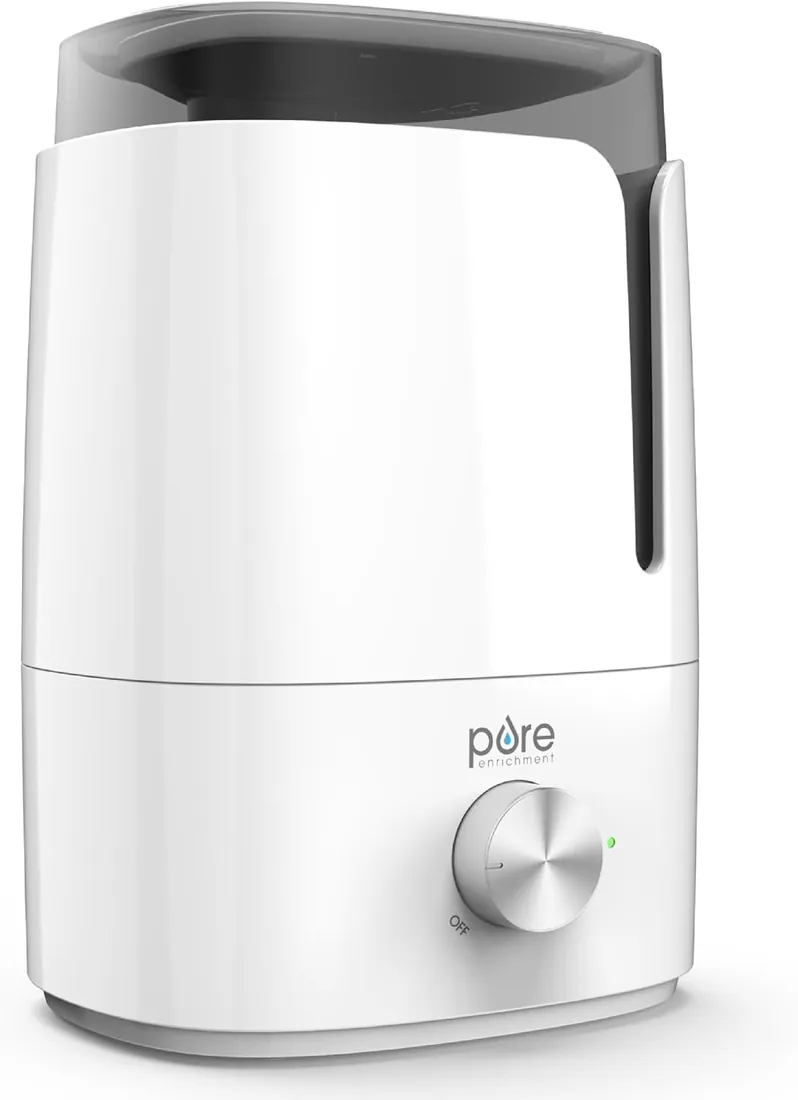
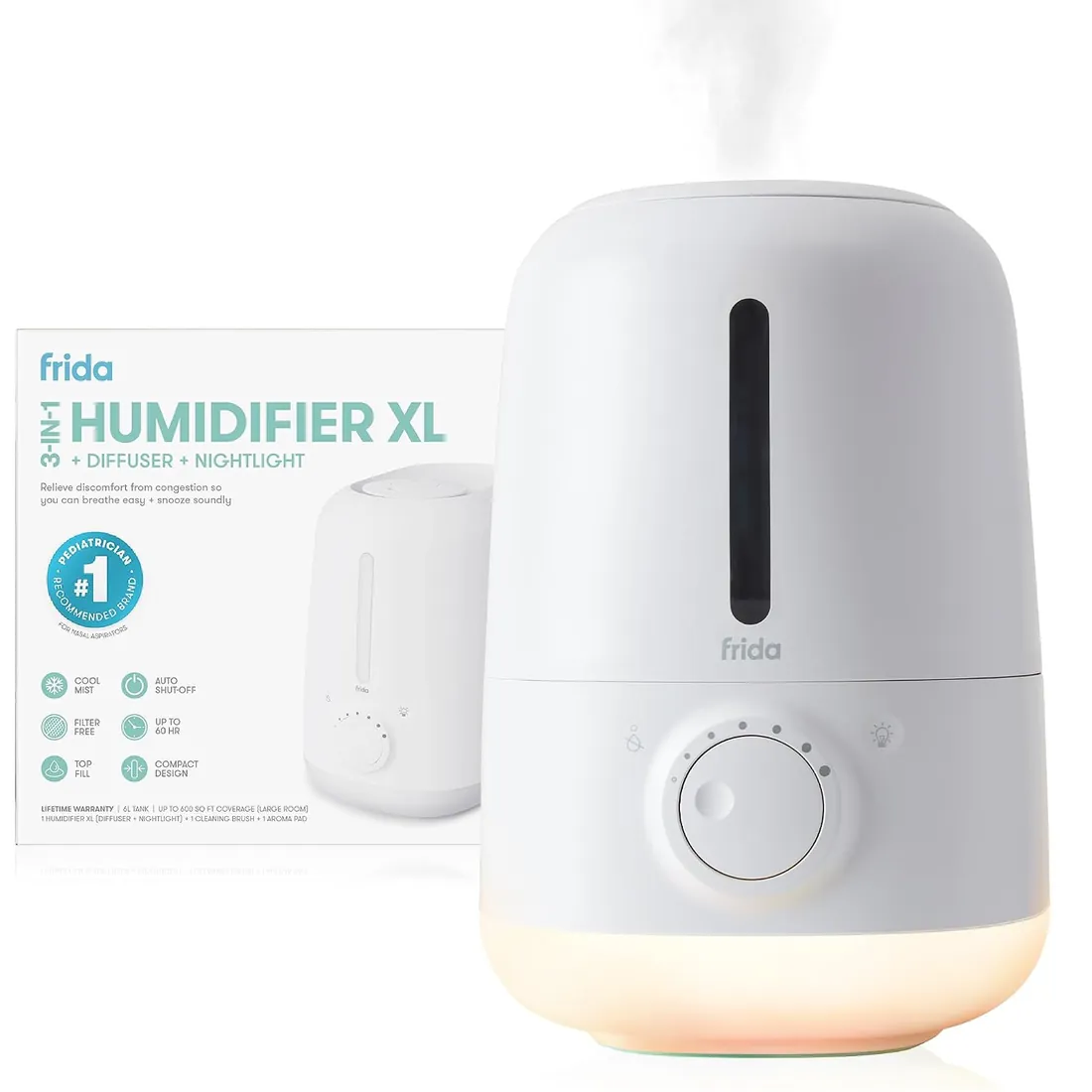
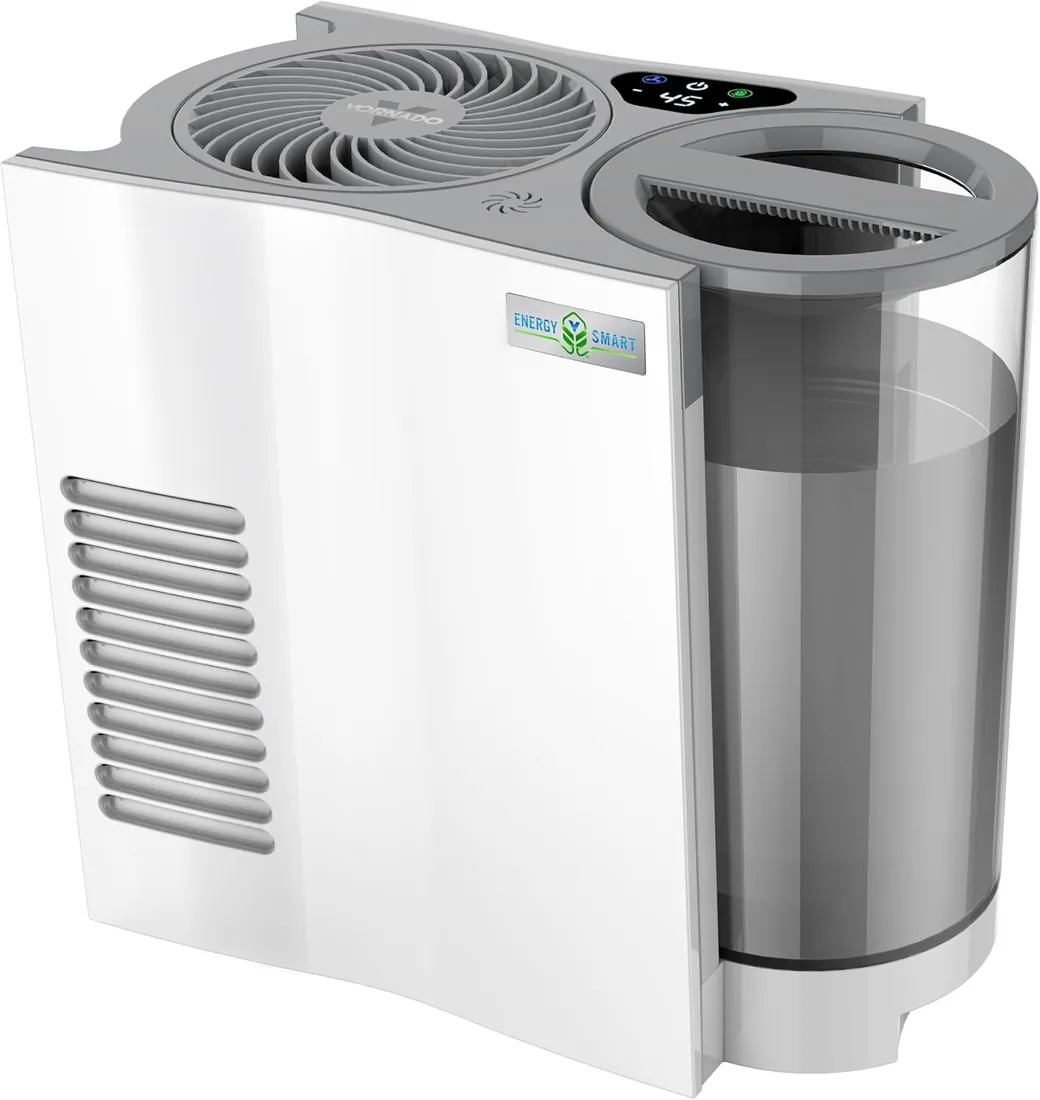
Choose cool mist for children's rooms, homes with pets and anyone who wants low running costs; it has no hot water to spill. Choose warm mist if you have hard water and do not want to buy distilled water, or want the cleanest vapor, accepting a burn risk and an electricity draw of roughly 200 to 400 W. Once the moisture is in the air, both raise humidity by the same amount.
How each type works
- Evaporative (cool mist): a fan pulls dry air through a wet wick, which gives off invisible water vapor. It is self-limiting: as the room gets more humid, evaporation slows, so it is hard to over-humidify. It leaves no white dust, but the wick needs regular replacement.
- Ultrasonic (cool mist): a plate vibrating at ultrasonic frequency shatters water into a fine visible mist. It is nearly silent and uses little power, but any minerals in tap water are sprayed into the room as white dust.
- Warm mist / steam: a heater boils water and releases the steam, which cools before it leaves the unit. Boiling leaves minerals behind in the chamber and kills most microbes, but it draws far more power and the reservoir is hot.
Warm mist does not noticeably heat a room: a few hundred watts spread through a bedroom is a small amount of heat, and the vapor cools as it mixes with room air.
Side by side
| Evaporative (cool) | Ultrasonic (cool) | Warm mist / steam | |
|---|---|---|---|
| Burn risk | None | None | Hot water and steam |
| Typical power | Fan only, low | Very low | Roughly 200 to 400 W |
| Noise | Fan noise | Near-silent | Quiet, some bubbling |
| Hard water | Scales the wick | White dust in the room | Scale stays in the chamber |
| Germs | Needs weekly cleaning | Needs weekly cleaning | Boiling kills most microbes |
| Over-humidifying | Self-limiting | Possible without a humidistat | Possible without a humidistat |
| Ongoing parts | Wicks | Optional cartridges | Usually none or pads |
What the difference costs to run
Over a four-month winter, that is about $50 more for warm mist than ultrasonic. Ultrasonic units can cost more in distilled water if your tap water is hard.
Which to choose
- Nursery or child's room: cool mist, ideally evaporative, out of reach with the cord secured. Pediatric guidance generally favors cool mist because of the burn risk.
- Hard water and no wish to buy distilled: evaporative or warm mist; avoid ultrasonic.
- Light sleeper: ultrasonic, the quietest type.
- Large or open room: evaporative units usually move the most moisture for their running cost.
- Germ-conscious and diligent about safety: warm mist, placed where it cannot be knocked over.
Whichever you choose, keep humidity at 30 to 50% and clean the unit weekly; see how to clean a humidifier and evaporative vs ultrasonic.